
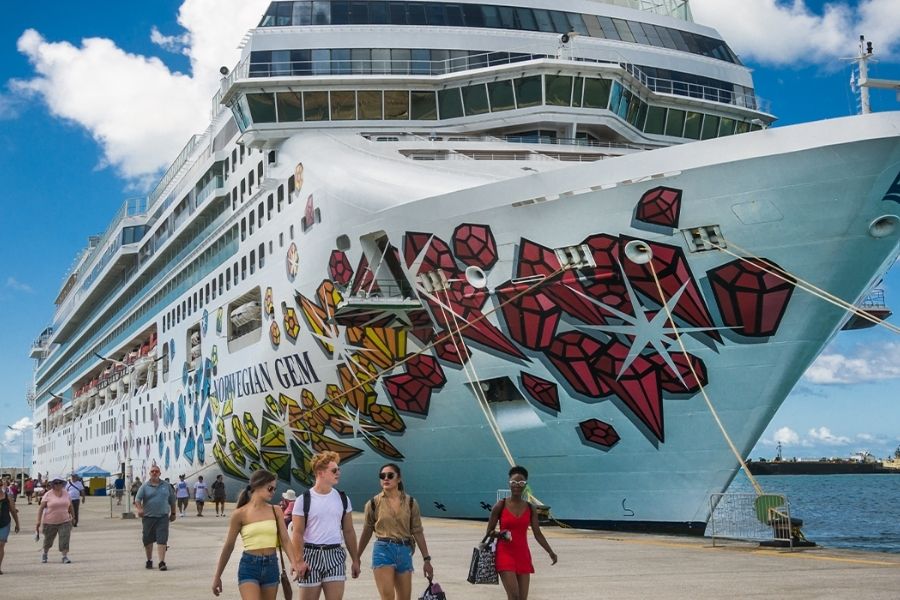

In contemporary educational travel, short shore excursions are increasingly viewed as more than brief sightseeing opportunities. When integrated into structured school trips, these limited onshore experiences become powerful learning environments that extend education beyond textbooks and classrooms. Within just a few hours at port, students can encounter history, geography, culture, and social realities in ways that formal instruction alone often cannot achieve. This evolving perspective highlights the growing importance of the educational of shore excursions in modern learning frameworks.
Unlike traditional academic settings, shore excursions place learners directly within real-world contexts. Streets replace diagrams, local communities replace case studies, and historical sites replace abstract timelines. This immediacy transforms passive knowledge into lived understanding, allowing students to connect academic concepts with tangible experiences. As experiential learning gains recognition worldwide, short shore excursions are increasingly acknowledged as legitimate educational tools rather than optional travel add-ons.
Education of Shore Excursions as Experiential and Place-Based Learning

Educational research consistently emphasizes that meaningful learning occurs when students actively engage with their surroundings. The education of shore excursions is deeply rooted in experiential and place-based learning theories, which argue that knowledge becomes more durable when tied to specific locations and experiences.
Experiential learning through direct engagement
Educational theorists such as John Dewey and David Kolb stress that experience, reflection, and application form the foundation of effective learning. Shore excursions naturally follow this cycle. Students observe real environments, ask questions, and later reflect on what they have encountered. A brief walk through a historic port or cultural district can reinforce lessons in history, economics, and social studies far more effectively than abstract descriptions.
Place-based education and cognitive retention
Studies in place-based education show that students retain information more effectively when learning is anchored to physical locations. Seeing architectural styles, urban layouts, or natural features in person creates strong mental associations. Even short excursions provide these anchors, strengthening memory and comprehension long after the journey ends. This reinforces the education of shore excursions as a high-impact learning format despite limited time.
Cultural Immersion and the Education of Shore Excursions for Global Awareness

One of the most significant educational outcomes of shore excursions is cultural exposure. Even brief interactions with local environments can deepen students’ understanding of cultural diversity and global interconnectedness.
Learning culture through observation and interaction
Rather than staged performances, shore excursions often introduce students to everyday cultural practices, local markets, community spaces, religious landmarks, and traditional crafts. These encounters encourage learners to observe social norms, communication styles, and values within their authentic context. Cultural educators note that such real-world exposure fosters cultural sensitivity and reduces stereotypes, even when interaction time is short.
Building intercultural competence
International education organizations, including UNESCO, identify intercultural competence as a critical skill for the 21st century. The education of shore excursions lies in their ability to introduce cultural complexity in manageable, age-appropriate experiences. With proper guidance, students learn to interpret cultural differences thoughtfully rather than superficially, supporting long-term global awareness.
Historical and Geographical Education of Shore Excursions in Context

History and geography are particularly well suited to shore-based learning. Many ports are historically significant locations shaped by trade, migration, and cultural exchange, making them ideal outdoor classrooms.
History experienced through physical space
Standing within historic districts, ancient ruins, or colonial ports allows students to contextualize historical narratives. Instead of memorizing dates, learners witness the physical traces of the paststreet layouts, building materials, and spatial relationships that reflect historical events. Educational psychologists note that such embodied learning increases emotional engagement and historical empathy.
Geography observed rather than imagined
Geographical concepts such as coastal formation, river systems, urban planning, and trade routes become immediately visible during shore excursions. Observing these elements firsthand strengthens spatial reasoning and environmental understanding. This direct observation underscores the education of shore excursions by transforming geography from abstract theory into observable reality.
Environmental Educational of Shore Excursions and Sustainability Awareness

Environmental education benefits greatly from direct contact with natural and built environments. Shore excursions provide students with opportunities to observe ecological systems and human-environment interactions in real time.
Learning ecosystems through firsthand exposure
Coastal zones, riverbanks, and port cities are dynamic ecological spaces. Students can observe biodiversity, land use, and environmental challenges such as pollution or erosion. Environmental education research shows that firsthand exposure increases environmental awareness and promotes responsible attitudes toward sustainability.
Connecting local environments to global issues
Shore excursions allow educators to link local observations to global environmental challenges such as climate change, conservation, and sustainable development. The education of shore excursions becomes particularly valuable when students understand how global issues manifest in specific locations, making abstract concepts more relevant and urgent.
Structuring the Education of Shore Excursions for Academic Value

While shore excursions naturally offer learning opportunities, their educational effectiveness depends on intentional design. Without structure, excursions risk becoming passive tourism rather than meaningful learning experiences.
Alignment with curriculum objectives
Educational shore excursions are most effective when aligned with curriculum standards. History, geography, environmental science, and social studies outcomes can all be addressed within short excursions. This alignment ensures that learning objectives are met and allows schools to formally recognize the educational value of travel experiences.
Preparation, guidance, and reflection
Educational studies emphasize that preparation and reflection are essential components of experiential learning. Pre-excursion briefings introduce key concepts, while guided interpretation on-site provides context. Post-excursion reflection through discussion or assignments helps students consolidate learning. These steps significantly enhance the education of shore excursions, transforming experiences into lasting knowledge.
The Lasting Education of Shore Excursions Beyond the Classroom
Short shore excursions demonstrate that meaningful learning does not require extended timeframes or distant destinations. When thoughtfully designed, even brief onshore experiences can deliver rich educational outcomes across cultural, historical, geographical, and environmental domains.
The education of shore excursions lies in their ability to bridge theory and reality, offering students authentic encounters that deepen understanding and foster global awareness. As educational travel continues to evolve, shore excursions are increasingly recognized as valuable learning tools capable of shaping perspectives, strengthening academic concepts, and enriching student development far beyond the ship and the classroom.


0 Comment